
Australian-led international study reveals the cause of hypertension in obesity
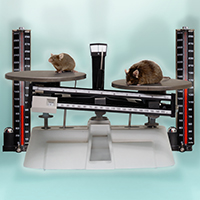 Leptin, a hormone that regulates the amount of fat stored in the body, also drives the increase in blood pressure that occurs with weight gain, according to researchers from Monash, Warwick, Cambridge and several American universities.
In a ground-breaking study published today in the journal Cell, a research team led by Professor Michael Cowley, from the Faculty of Biomedical and Psychological Sciences, have discovered the link between obesity and hypertension.
Being obese or overweight has long been acknowledged as a major risk factor for the development of high blood pressure and cardiovascular diseases. Whilst a number of factors may be involved, the precise explanation for the link between these two conditions has been unclear until now.
This research has discovered that the hormone leptin, which is secreted by fat cells and is significantly elevated following weight gain and in obesity, acts in the brain to elevate blood pressure. Mice and humans, including a cohort who had problems producing or processing the hormone leptin were compared with ‘healthy’ individuals to see whether this hormone could provide the link.
In collaboration with Professor Sadaf Farooqi, from the University of Cambridge, UK, it was shown that some obese people who were lacking the hormone leptin because of a genetic disorder had low blood pressure despite being very heavy. This was also the case for people lacking the gene for the leptin receptor in the brain, meaning that the brain was unable to respond to the hormone.
As much as 80% of common hypertension is caused by excess body fat, and this study for the first time describes the mechanism by which obesity elevates blood pressure.
The study used a number of new and unique technologies to link leptin in obesity induced hypertension:
- Modelling the human condition, only those mice with normal leptin signalling showed an increase in blood pressure when they became obese
- This data was confirmed in human studies, in which obese leptin-deficient and leptin receptor-deficient patients had lower systolic blood pressure compared to aged and BMI matched controls
- Restoring leptin receptors to the brain of obese leptin receptor-deficient mice increased their blood pressure
- Multiple blockage methods of the leptin receptor in the brain reduced the hypertension of obese mice
- Acute blockage of the electrical activity of the leptin receptor expressing cells in the brain of obese hypertensive mice immediately reduced their blood pressure, confirming the role of these neurons in elevating blood pressure in obesity
These experiments clearly demonstrate that leptin signalling is one of the factors which increases blood pressure. The clinical studies in severely obese humans showed that these observations are relevant to humans.
“High blood pressure is a well-known consequence of obesity. Our study explains the mechanism behind this link, showing that leptin, a hormone secreted by fat, increases blood pressure,” Professor Cowley said.
“For me, the most therapeutically relevant part of this discovery is that we can now say to patients: your obesity is causing your hypertension, whereas previously we said being obese was a risk factor for hypertension. It's a direct causal link now. And so we can also say to reduce your high blood pressure, you need to lose weight,” he added.
This work was supported in Australia by the Heart Foundation of Australia, The National Health and Medical Research Council of Australia, Monash University and Pfizer Australia; and in the UK by the Wellcome Trust, the Medical Research Council, NIHR Cambridge Biomedical Research Centre and Bernard Wolfe Health Neuroscience Fund.
The researchers are now investigating whether blocking the leptin receptor may be a way to reduce the incidence of hypertension and cardiovascular diseases in obesity. The anti-hypertensive drug market is expected to exceed $40 billion* annually by 2018.
*World Preview 2018 report by Evaluate Pharma.